The False Economy of the Old MEWP: Seven Audit Triggers for 2026
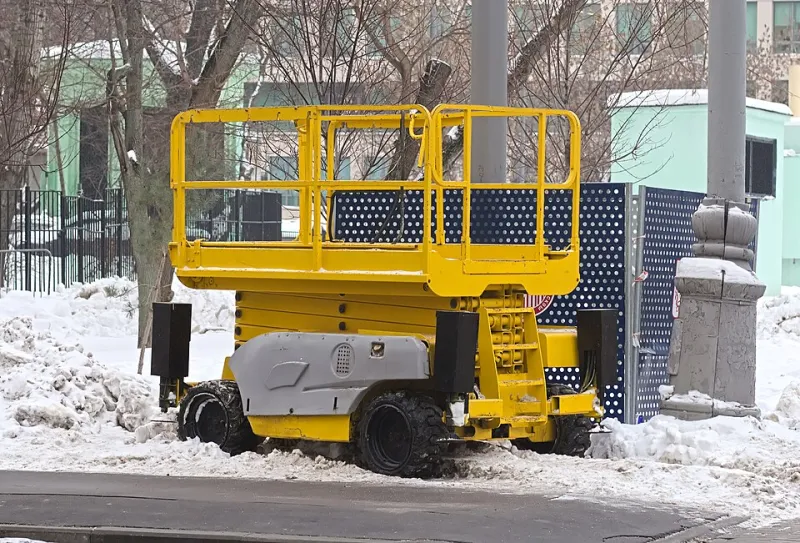
Photo: Retired electrician, CC0, via Wikimedia Commons
Mobile elevating work platforms are capital assets, but they are also compliance assets. A MEWP that is ageing gracefully can still be a sound investment; a MEWP that is ageing quietly can become a drain on budget, productivity and safety confidence. The difficulty is that the costs rarely announce themselves in one line of the accounts. They appear as repeated repairs, short-term hires, delayed projects and inspection findings that never quite go away.
This is an opinionated audit framework, not a substitute for LOLER and PUWER duties. Its purpose is to help UK contractors and facilities managers see the pattern before an ageing machine becomes a compliance liability. If several of the seven triggers below are present, the question is no longer whether the fleet is costing more than it saves. It is what to do about it.
1. Inspection Findings Are Repeating
A single defect is a maintenance event. The same defect appearing across successive inspections is a signal. Recurring hydraulic leaks, worn pins, damaged guards or intermittent control faults suggest systemic wear rather than isolated failure. Under LOLER, MEWPs used for lifting people require thorough examination at least every six months, and PUWER inspections should be part of the routine. If the paperwork shows a cycle of similar findings, the machine is telling you something about its condition.
2. Downtime Is Becoming Routine
Unscheduled stoppages are easy to absorb individually and expensive in aggregate. Each breakdown can trigger a replacement hire, rescheduled work, idle labour and administrative effort. The true cost is not the repair invoice; it is the project delay and the management time spent working around the machine. A fleet that regularly needs rescue cover from the hire desk is not a cheap fleet, even if the capital charge is fully depreciated.
3. Parts Lead Times Are Stretching
Older models often sit outside the fast-moving parts network. A component that once arrived overnight may now take weeks, and some parts may only be available second-hand. When maintenance teams start cannibalising one machine to keep another running, the fleet is already in a fragile state. Long lead times also encourage temporary fixes, which can undermine both safety and residual value.
4. Operators Are Losing Confidence
Operators notice subtle changes before the maintenance log does: slower responses, unusual noises, batteries that no longer hold charge through a shift, or controls that feel less precise. Complaints should not be dismissed as habit. Reduced confidence can lead to cautious working, avoided tasks or, worse, improvised workarounds. A machine that operators distrust is a machine that carries hidden behavioural risk.
5. Age and Duty Cycle No Longer Match
A ten-year-old MEWP that does light indoor work may still be entirely serviceable. The same machine on a high-cycle outdoor site may be nearing the end of its economic life. Duty cycle matters. Battery performance, hydraulic systems, structural wear and tyre condition all reflect how the machine has been used, not just how old it is. Audit the machine against the task, not against the calendar alone.
6. Compliance Paperwork Is Patchy
Missing LOLER thorough examination reports, incomplete PUWER inspection records or unclear repair histories are more than administrative untidiness. They make it harder to demonstrate that the equipment is safe and suitable for use. They also make it harder to sell or part-exchange the machine later. If records are being reconstructed after the event, the fleet is already carrying avoidable compliance exposure.
7. Repair Spend Is Crossing the Replacement Threshold
There is no universal percentage at which repair becomes false economy, but the principle is straightforward. Compare annual maintenance and repair spend, downtime cost, replacement hire spend and compliance risk against the cost of replacing or rehiring. A machine that consumes a substantial share of its replacement value every year is a candidate for retirement. A machine that needs a major structural or hydraulic repair may be better replaced than restored.
Repair, Replace or Retire
The decision should be disciplined rather than emotional. Repair is sensible where the fault is isolated and the machine remains suitable for its duty. Replace is sensible where downtime and compliance risk are rising but the task still requires a similar asset. Retire is sensible where the machine no longer matches the work, the parts network has dried up or the cost of keeping it compliant exceeds its operational value.
For facilities managers, the strongest argument for an audit is not fleet aesthetics. It is control. A reviewed MEWP fleet is easier to budget for, easier to inspect and easier to defend. In 2026, with hire rates, labour costs and compliance expectations all demanding attention, the oldest machine in the yard should be the one you understand best.