Say It Every Shift: Turning Familiarisation Into a Site-Specific MEWP Handover

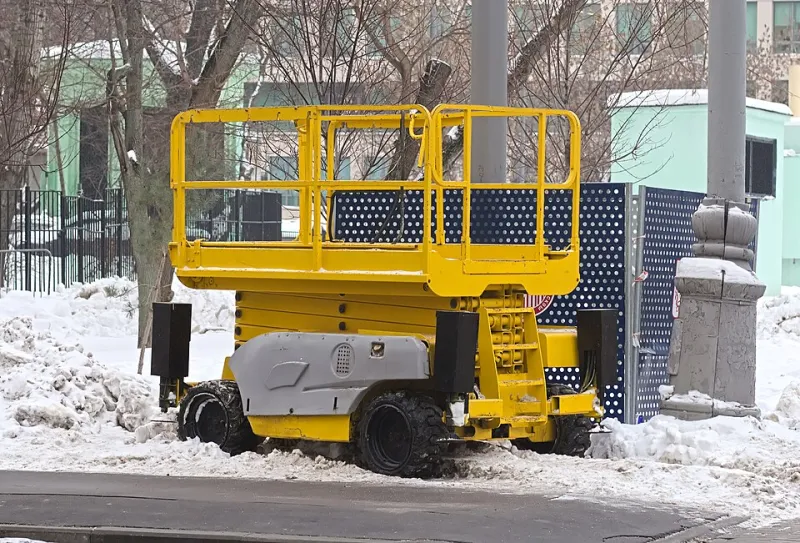
Photo: supervisor briefing MEWP operator beside scissor lift on UK construction site with clipboard, via down-ph.img.susercontent.com
There is a comfortable assumption on many sites that a valid operator card settles the question of competence. It does not. A card confirms that someone has been trained and assessed on a category of machine at some point in the past. It tells a supervisor nothing about whether that person knows where the cellar hatch is, which way the wind comes across the loading bay, or who will bring them down if the platform stops responding at eleven metres.
That gap is not a training failure. It is a handover failure, and it sits squarely with the person in charge of the shift.
Familiarisation is about the machine; handover is about the day
Manufacturer and hire company familiarisation is a machine-specific process: controls layout, rated capacity, platform limits, emergency lowering procedure, the meaning of fault codes, the function of secondary guarding. It is essential and it is not negotiable. But it is generic by design. It must be, because the machine does not know where it is going to work.
The supervisor's handover is the opposite. It is entirely local. It covers the ground the machine will track over, the boundaries of the exclusion zone on this frontage, the anchor points available in this platform, the site rules on this client's premises, and the route to the nearest emergency department. Under the Work at Height Regulations 2005, the duty to organise, plan and supervise work at height, and to have arrangements for emergencies, rests with the employer. A briefing that is delivered and recorded is one of the simplest ways of demonstrating that those duties were actually discharged on the day rather than merely written down in a file.
Why the same words, every time
Mixed-ability teams are the norm: agency staff on their second shift, an experienced operator who has done the job a hundred times, a subcontractor who speaks English as a second language, a labourer who has never been in a platform. If the handover is improvised, its quality depends on how busy the supervisor is that morning.
A fixed script solves that. It gives everyone the same baseline, it removes the assumption that the experienced hand already knows, and it creates a record that shows what was said, to whom, and when. Five to eight minutes, delivered at the machine, with the platform on the ground.
The script: six blocks and a local addendum
1. The machine and its limits. Name the machine and category. Point out the rated capacity and the number of persons permitted. Confirm the maximum wind speed for operation and where that figure is displayed. Identify the tilt limits and the audible warning. Explain what the secondary guarding does and what the operator should do if it activates. Confirm which controls are in use and that the ground control box is secured. State clearly that no one adjusts, disables or bypasses a safety device.
2. Emergency lowering. Physically point to the controls and the auxiliary lowering method. Have the operator demonstrate it themselves, once, while the supervisor watches. Then ask the harder question: what happens if the person in the platform is incapacitated? Confirm the ground rescue arrangement, who is authorised to use the ground controls, and how long that person will take to reach the machine. If the answer is 'we will ring the hire company', the rescue plan needs rewriting before work starts.
3. Harness and anchor points. For boom-type platforms, confirm the anchor point location and that a work restraint lanyard of the correct length is being used so that the operator cannot leave the platform. For scissor lifts, confirm the site's rule on harness use and that the manufacturer's guidance has been followed. Check the harness and lanyard pre-use, and record the check.
4. The exclusion zone on this site. Walk the operator around it. Confirm the barrier line, the pedestrian gate, the marshal's position, and the drop zone beneath the platform. State the rule plainly: nobody enters without eye contact and acknowledgement from the operator. Confirm who is permitted to be inside the zone at all, and what happens if a member of the public ignores the barrier: stop the platform, do not shout across the zone.
5. The ground and the route. Show the operator where covers, hatches, gullies, soft spots and slopes are, and where the spreader plates go. Confirm the tracking route from the delivery point to the set-up position, and identify anything the machine must not be driven over. Point out the camber and any edge protection.
6. Defects, stop-work and reporting. Confirm the pre-use check has been completed and recorded. Show where the defect tag lives. Make clear that a defect means the machine is taken out of service, not repaired by the operator, and give the number to call. Give the near-miss reporting route, and confirm that stopping the job on safety grounds will be supported, not questioned.
The local addendum. Two minutes, no more: nearest A&E and the route to it, first aid arrangements, fire assembly point, radio channel, site contact and the client's own rules on smoking, PPE and photography.
Make them say it back
A briefing delivered as a monologue is not a briefing. Ask three questions at the end, chosen to test the things that matter most: where is emergency lowering, who is allowed inside the barrier line, what do you do if you find a damaged lanyard. Have the operator answer in their own words. Sign the sheet, record the time, and keep it with the day's paperwork.
Where a team is working together, brief the whole group in one voice so that everyone hears the same expectations, then confirm individually with anyone who was not present for the familiarisation on that specific machine.
What gets cut when the morning goes wrong
Every supervisor has had the shift where the vehicle arrived late and the client is asking why nothing is happening. When time is short, cut the small talk, not the content. The two blocks that can never be abbreviated are emergency lowering and the exclusion zone, because those are the two that decide whether a bad morning stays a bad morning or becomes an incident.
The handover is not paperwork that gets in the way of the job. It is the moment the supervisor sets the standard for everything that follows, and it is worth the eight minutes it takes.