The Uplift Brief: Planning MEWP Material Handling Before Mobilisation
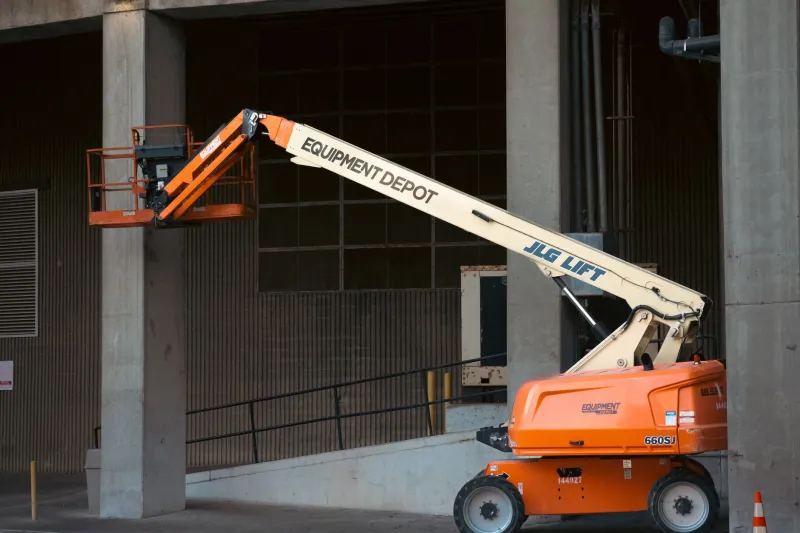
Material handling on a mobile elevating work platform is frequently planned backwards. The machine is selected, the access route is agreed and the operatives are briefed, then someone asks how the panels, ducts, glazing units or fixings will actually reach the workface. That final metre is not a detail to be resolved at the platform gate. It is an access decision in its own right, and it should be settled before the load leaves the ground.
For facilities managers and contractors in the UK, the practical risk is rarely a single dramatic failure. It is the accumulation of small assumptions: that the platform has spare capacity, that an attachment is suitable because it fits, that a sheet material can be hand-held in a breeze, or that the operator can shuffle the load once at height. A structured uplift brief removes those assumptions and gives the site a defensible record of how material handling was planned.
Start with the load, not the machine
The first question is not which MEWP is available. It is what has to be moved, in what form, and by what method. Record the weight of each item, its dimensions, its centre of gravity and whether it is rigid or flexible. Include packaging, pallets, lifting frames and any temporary restraints. A glazing unit that weighs 80 kg in the workshop may present a different load case once it is in a carrier, strapped to a platform rail or exposed to wind.
This information should be gathered before the hire enquiry becomes firm. It allows the access planner to test whether the task is a genuine MEWP material-handling job or whether a separate lifting operation, a material hoist, a telehandler or a ground-level feed arrangement is more appropriate. On constrained urban sites, the most effective control is often to keep the load off the platform altogether and bring it to the workface by a purpose-designed route.
Read the load chart as a boundary, not a target
The rated capacity shown on the platform is a maximum for a defined configuration. It is not a generous allowance to be used up. The load chart must be read with the machine in its actual setup: boom configuration, cage position, outreach, chassis level and any fitted attachment. Persons, tools, fixings, containment and the attachment itself all consume capacity.
A workable brief will show the calculation in simple terms. If two operatives at 95 kg each, 30 kg of tools and 25 kg of fixings already account for 245 kg, the remaining capacity for materials is not the headline figure on the decal. It is the difference between that figure and the combined operating load, subject to the manufacturer's instructions. Where the margin is thin, the plan should identify a reduced load, a different platform or a ground-level feed method rather than relying on operator judgement at height.
Attachments need compatibility, not just fit
Platform attachments are often selected because they are available. That is not the same as being approved for the machine and the task. Material cages, pipe racks, sign holders and sheet carriers should be checked against the manufacturer's documentation for the specific MEWP model and configuration. The attachment's weight must be included in the load calculation, and its fixing method must not interfere with guardrails, gates or anchor points.
There is also a human factors point. An attachment that encourages operatives to lean out, reach over the rail or unload from an awkward angle can undermine the control it was meant to provide. The brief should state how the material will be loaded, secured, released and withdrawn. If the sequence involves manual handling at height, the assessment should address posture, grip and the risk of the load being dropped or snagged.
Sheet materials and wind sail
Flat sheets, boards, composite panels and glazing are particularly unforgiving loads. They present a large surface area to the wind and can behave as a sail even when the ambient breeze feels modest at ground level. Wind speed at the platform can differ from the site forecast, and the effect is amplified by the height of the machine and the surrounding built environment.
A practical plan will specify how sheet materials are restrained, how many operatives are needed to control them, and what wind condition stops the lift. It should also identify a safe parking or lay-down position for the material when it is not being fixed. Leaving a panel unsecured on a platform while the operator repositions the machine is not an acceptable interim state. Where wind is marginal, the right decision may be to postpone the material movement while allowing other work to continue.
Sequence the work so the platform is never a store
MEWP platforms are work stations, not storage areas. A common cause of overcrowding and instability is the practice of loading the platform with all materials for a shift. The uplift brief should break the task into movements: what arrives with the first ascent, what is fed from ground level, where surplus material is held, and how waste or offcuts are removed.
Sequencing should also account for the access route. If a delivery vehicle must wait while the platform is repositioned, or if a ground-level feed point conflicts with pedestrian routes, the plan needs to say so. On occupied sites, material movements may need to be timed around tenant activities, deliveries or school hours. The final metre is therefore connected to the first metre of the site compound, not isolated from it.
Make the brief visible at handover
The plan is only useful if it reaches the people who will carry it out. The MEWP handover should include the material-handling method, the calculated load margin, the approved attachment, the wind stop-go criteria and the arrangement for ground-level feeding. Operators should have the opportunity to challenge the sequence before work starts, particularly where the platform configuration differs from the hire specification.
A short pre-use check can confirm that the attachment is the one specified, that the load chart is legible and applicable, and that the platform is free from unplanned material. Supervisors should treat any deviation as a change to be assessed, not a workaround to be tolerated. The record need not be elaborate, but it should show that the last metre was planned with the same discipline as the access route, the ground conditions and the rescue arrangements.
Conclusion
Material handling at height is not an afterthought to MEWP selection. It is one of the inputs that should determine the selection. By defining the load, reading the chart as a boundary, verifying attachments, controlling wind sail and sequencing movements before mobilisation, facilities teams can reduce the likelihood of overcrowded platforms, unplanned manual handling and loads that exceed rated capacity. The last metre deserves a plan of its own.