Clearance Is a Decision, Not a Measurement: Overhead Line Planning for Powered Access
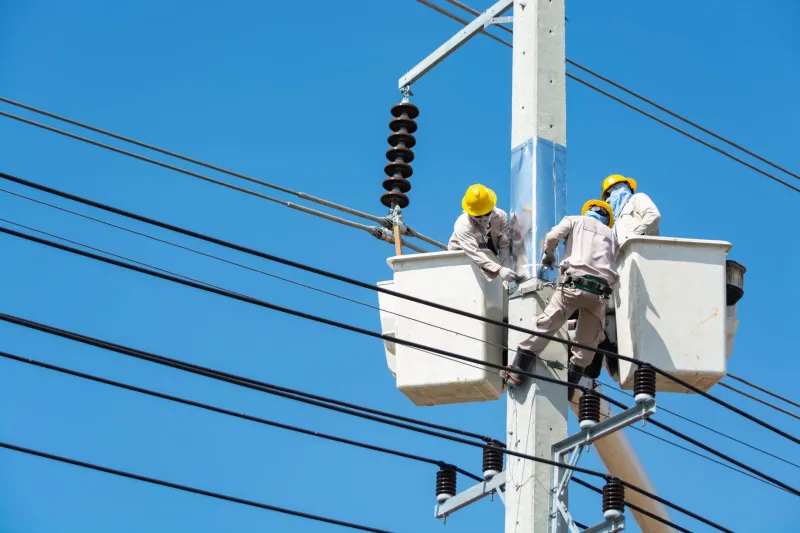
Overhead power lines are a familiar feature of industrial estates, retail parks and mixed-use service yards. They cross delivery routes, run along car park edges and pass close to roof plant that may need attention at short notice. The hazard is usually visible. The problem is that the control is often not. A facilities team may know a line is present, a contractor may be told to keep clear, and a machine may be positioned on the day against a distance that nobody has formally agreed. That is not a plan. It is an assumption waiting to be inherited by someone else.
Begin with the network owner, not the machine
The first planning question is not which boom lift to hire. It is who owns the line and what they require. Distribution network operators (DNOs) and independent distribution network operators (IDNOs) hold records that site plans, landlord packs and old utility drawings frequently fail to match. For a site with 11kV lines crossing a service yard, the identity of the network owner should be established before access procurement begins, not after a machine is booked.
A postcode search through the Energy Networks Association distributor tool is a sensible starting point, but it should be confirmed with the relevant network operator. Where the line is privately owned, the responsibility may sit with the landlord or a third party. The key is to obtain written confirmation of ownership and the operating voltage. Without that, any clearance figure is little more than a guess dressed as a measurement.
Open the DNO consultation early enough to matter
DNO consultation is sometimes treated as a late administrative step. In practice, it is a design input. The network operator can advise on clearances, the acceptability of goalposts and barriers, possible isolation or diversion, and any conditions attached to working near the line. Those answers can affect machine selection, programme and cost. Leaving the approach until the week of works may mean the only remaining option is to stop.
For 2026 procurement rounds, facilities teams should build this consultation into feasibility and tender stages. Ask the DNO for a written response that identifies the line, states the required clearance and sets out any conditions for the work. Where an isolation is needed, record the agreed date and the limits of that isolation. Where the line will remain live, record the physical controls that the DNO expects to see. A reference number and a named contact are more useful in a site file than a verbal assurance remembered by one person.
Apply GS6 as a framework, not a tape measure
HSE guidance GS6, Avoiding danger from overhead power line contact, sets out a hierarchy of control. Avoidance comes first. Where that is not reasonably practicable, the next steps involve isolation, distance and physical barriers. The guidance is not a substitute for a site-specific decision, and it should not be reduced to a single number copied onto a permit.
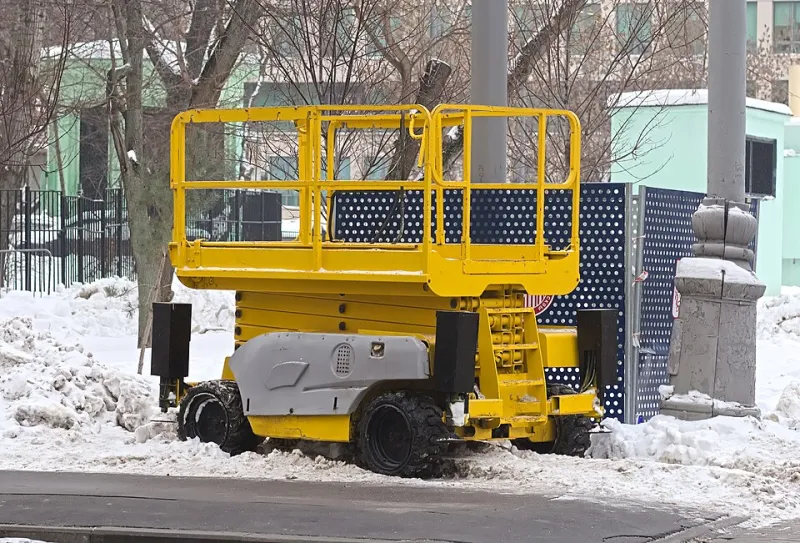
Goalposts and barriers are the visible expression of that decision. They should be positioned to prevent any part of the machine, its attachments or the load from entering the danger zone. This means considering the full operating envelope of the boom, including jib movements, material handling and the possibility of unintended movement. It also means considering scissor lifts where they operate near lines, not only boom lifts. A barrier that can be moved by a delivery vehicle, or a line of cones that nobody treats as a limit, is not a reliable control.
The physical control should be agreed before the machine arrives. It should be installed by a competent person, inspected at the start of the shift and protected from site traffic. If the barrier is damaged or displaced, work should stop until the control is restored.
Why a single measurement is not enough
A common failure is the belief that the job has been controlled because someone measured the distance once. That measurement may be accurate at the moment it is taken, but it is not a durable control. Ground conditions change. Soft ground, recently excavated areas, trackway, spoil heaps and changing loads can affect machine stability and position. A boom lifted over a service yard may not follow the geometry assumed in a static plan. Different machines have different dimensions and operating envelopes.
We measured it once also ignores the human factor. A subcontractor arriving on a Friday afternoon may not know which line was measured, from which point, or under what conditions. If the clearance decision is not recorded and handed over, the measurement becomes folklore. The safer approach is to define the exclusion zone, install the physical control and record the basis for it. The tape measure is evidence, not the strategy.
Put the decision into the site file
The site file should allow a competent person who was not present at the planning meeting to understand the control. Record the line owner, voltage, DNO reference and any written conditions. Include a plan showing the line, the machine positions, the goalposts or barriers and the agreed clearance. Add photographs of the installed controls and note who inspected them. Record the machine types permitted and any restrictions on boom movement or material handling.
Handover matters as much as paperwork. The access contractor should receive the overhead line control as part of the site induction and the permit-to-work process. Their RAMS should reflect the recorded decision, not a generic statement to avoid overhead lines. A short briefing that confirms the barrier position and the stop-work trigger is more valuable than a signature on a document nobody reads.
A practical checklist for facilities teams
- Identify every overhead line affecting the works, including lines across service yards, delivery routes and car park edges.
- Confirm the network owner and operating voltage in writing before tendering access work.
- Open DNO consultation at feasibility stage and allow for lead times on isolation or conditions.
- Obtain written clearance requirements and any restrictions on machine type or movement.
- Specify goalposts or barriers as physical controls, with a named person responsible for installation and inspection.
- Assess ground conditions and recheck the control after groundworks, heavy rain or changes in site traffic.
- Brief the access contractor and confirm that their RAMS match the recorded clearance decision.
- Include a stop-work trigger for displaced barriers, changed ground conditions or unfamiliar machines.
- Keep the plan, DNO response, photographs and briefing records in the site file.
The goalposts are not a paperwork exercise. They are the point at which a clearance decision becomes visible on site. When they are planned early, installed properly and recorded clearly, a subcontractor on a Friday afternoon inherits a control rather than a hazard.