Between the Bollards and the Bus Stop: Running Powered Access on a Working High Street
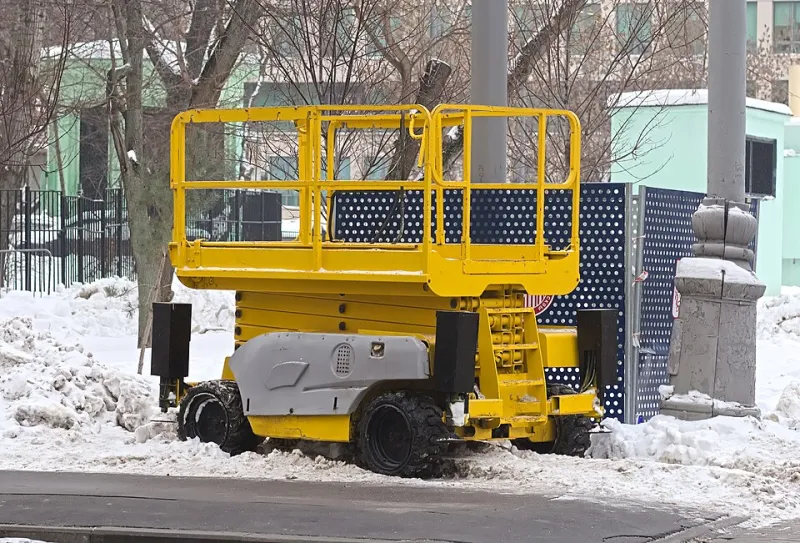
Photo: Retired electrician, CC0, via Wikimedia Commons
A high street frontage is the least forgiving place in the country to position a mobile elevating work platform. The public keeps moving, the deliveries do not stop, the pavement furniture is bolted down, and the ground beneath the surface is often a good deal older and more complicated than it looks. Unlike a compound, there is no perimeter to rely on. Everything that keeps people safe has to be created, explained and maintained by the team on the day.
The frontage is a live site, not a backdrop
Contractors who work mainly on industrial estates tend to underestimate the public interface. On a high street, the pedestrian flow is continuous, largely unaccompanied by anyone with authority, and frequently includes people who cannot easily change route: wheelchair users, parents with prams, people with visual impairments, older shoppers and, at the right times of day, schoolchildren. The evening economy brings a different crowd, and a different set of behaviours, to the same few metres of paving.
The operator in the platform has a narrow view of the ground. Their attention is on the work at height. That means the ground-level interface cannot be left to chance or to a general instruction to 'keep an eye out'. It needs a named person, a physical boundary and a plan that has been discussed with the business whose shopfront you are working above.
Read the street before the vehicle arrives
A survey undertaken at 6am is not a survey. Walk the frontage at trading hours, at delivery peak and at school finishing time, and the picture changes entirely. Note where the queue forms outside the pharmacy, where the café's pavement seating sits, where the bus shelter and cycle racks are, where the waste collection stops.
Build a simple timetable of what happens in front of the building during the day:
- delivery windows for the host retailer and its neighbours, including the early-morning ambient drops and the afternoon courier runs
- refuse and recycling collections, which often use the same limited kerbside space
- peak pedestrian periods, including lunchtime and the school run
- any licensed premises activity that changes the risk after dark
That timetable drives the works schedule, not the other way round. Where the client is a retailer, agree an embargo with them: no articulated vehicle on the bay while the boom is deployed, and a named contact on the shop floor who can hold a delivery if it arrives early.
Permits, suspensions and the authority conversation
Working on or over the public highway brings a separate layer of control. Most highway authorities require a licence or permit for works on the footway, and a suspension of the parking bay or loading bay may be needed for the vehicle. Lead-in times vary considerably between councils and can run into weeks, particularly in city centres operating permit schemes. Applying late is one of the most common causes of an unplanned early-morning start turning into a rushed one.
When the authority grants permission, read the conditions properly. They may restrict hours, require specific signing and guarding, limit the width of footway remaining open, or impose a condition that a banksman is present at all times. Those conditions are the baseline against which any enforcement officer will assess you, and they should be reproduced in the method statement rather than filed with the approval.
Exclusion zones that people actually respect
A tape line means nothing to a shopper with headphones on. The exclusion zone must be physical, visually obvious and sized from the risk assessment rather than from what happens to fit between the shopfront and the kerb. Size it for the full envelope of the machine: the sweep of the boom, the rear swing of a chassis, the fall zone for tools and materials, and the drift of anything light in wind.
Where pedestrians must pass, create a defined route with rigid barriers and a clear pedestrian gate, and staff the pinch point. Keep the passable width adequate for a wheelchair or a double pram; if the footway cannot accommodate that, a signed diversion agreed with the highway authority is the correct response, not a squeeze past. For works close to the carriageway, the signing and guarding regime set out in Chapter 8 of the Traffic Signs Manual is the recognised reference point, and it needs checking against the actual site layout rather than applying out of habit.
Ground conditions beneath the paving
This is where high streets catch people out. Paving slabs bedded on sand over shallow services, cellar hatches, basement lightwells, drainage covers, utility chambers and the vaults under many older commercial terraces all sit within a few metres of the shopfront. A pavement that has carried pedestrians for a century may not tolerate the point loading of a boom's outriggers.
Before set-up, establish where the machine's loads will land. Ask the building owner or the facilities team for drawings; check the pavement for cracking, settlement and sunken covers; and use spreader plates sized for the machine's ground pressure. Check slope and cross-fall against the manufacturer's limits, remembering that a crowned carriageway edge is a slope even when it looks flat. Never set up over a covered lightwell or a hatch, regardless of how substantial it appears.
Public interface and the person who owns it
Someone on site needs to be the public face of the operation. That person should be able to answer the question 'how long will this take?' with a straight answer, deal calmly with the customer who insists on walking through, and make the decision to stop the job if the interface becomes unmanageable. Arguing with a member of the public is never part of the method statement; pausing the platform and escalating is.
A short, consistent script works well: explain what is happening, thank them for their patience, and direct them to the alternative route. It sounds trivial until the shift where it prevents an incident.
A site-ready checklist
- Frontage walked at trading hours; footfall and delivery timetable recorded
- Permit or licence conditions reviewed and reflected in the method statement
- Delivery embargo agreed with host and neighbouring businesses
- Exclusion zone sized to the machine envelope and physically barriered
- Pedestrian route at least adequate for wheelchair and pram, with a staffed gate
- Ground conditions checked for vaults, covers, lightwells and slope; spreaders on site
- Named public interface marshal briefed and visible
- Emergency plan covering public evacuation from the work area, not just the platform
None of this is unusual in itself. What makes a difference is doing all of it, before the vehicle arrives, every time.