Cold Snap, High Stakes: A Winter Assurance Framework for Work at Height
Winter does not create new duties under the Work at Height Regulations 2005, but it sharpens the consequences of getting the basics wrong. Frost, low cloud, reduced daylight and cold hands all erode the margins that access teams rely on. For facilities managers responsible for occupied buildings, and for contractors maintaining them, the task is to convert seasonal risk into a set of explicit checks, stop rules and contingencies. The following framework is intended for use alongside existing risk assessments and method statements, not as a substitute for them.
Begin with a Winter-Specific Risk Assessment
A generic assessment for working at height will not capture the specific ways winter changes a task. The assessment should be reviewed against current forecasts, surface temperatures, wind chill, precipitation, access routes and emergency response times. It should also ask whether the work is genuinely necessary in the coming week. Deferring non-urgent external tasks is a legitimate control measure, and it is often more effective than attempting to manage ice, wind and poor visibility simultaneously.
Where work must proceed, plan for shorter productive windows. Daylight is limited, and the most experienced operatives are not immune to fatigue caused by cold and poor light. Build contingency into the programme rather than relying on overtime to recover lost hours.
Pre-Use Checks When Conditions Bite
Daily pre-use inspection is routine, but winter demands a more questioning approach. Platforms, scaffold boards, ladders, MEWP decks and access routes should be checked for ice, snow, standing water and contamination. A visual check from ground level is not sufficient where surfaces cannot be seen clearly. A competent person should confirm the condition of the equipment and record the outcome before work starts.
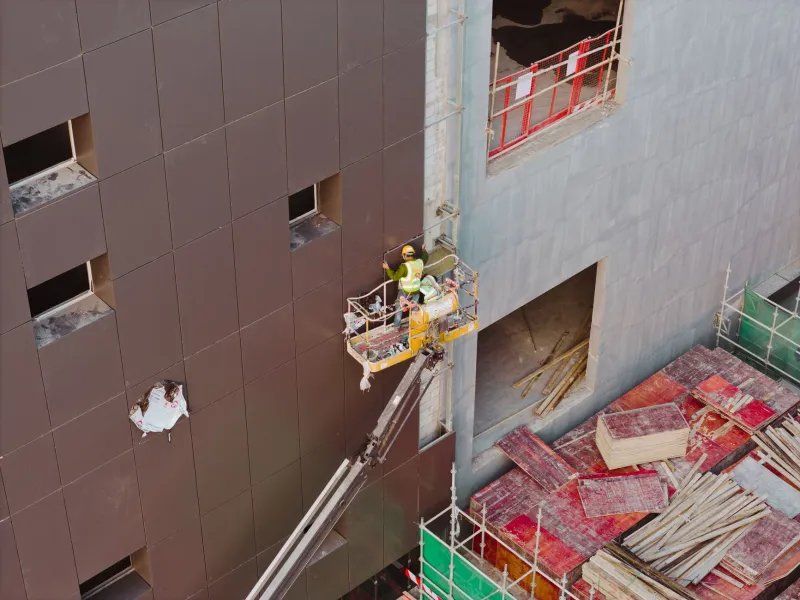
For MEWPs, check batteries, hydraulic systems, tyres, guardrails, anchor points and control responsiveness in low temperatures. For scaffolds, inspect ties, sheeting, netting, access ladders and platform condition. Snow and ice should not be removed by unauthorised operatives, particularly where removal could damage sheeting, netting or platform surfaces. If a platform or access route cannot be kept free of ice and snow, the task is not ready to start.
Wind, Ice and the Limits of Carrying On
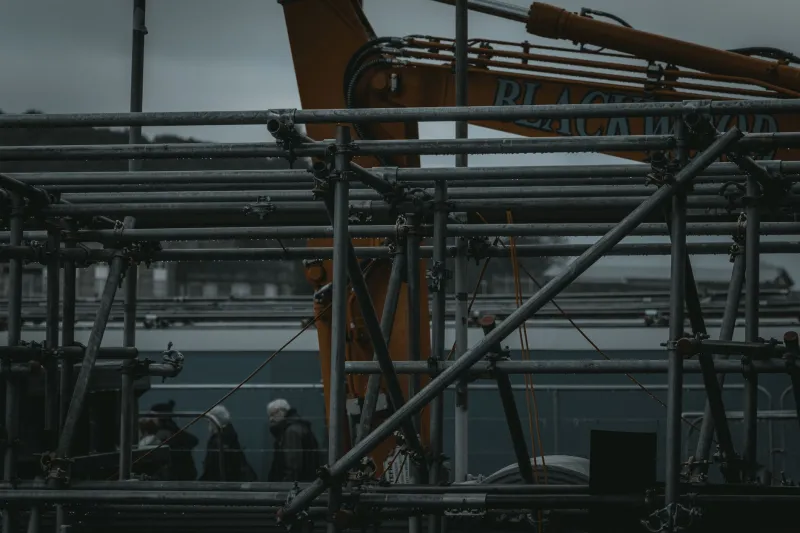
Wind limits should be taken from the manufacturer’s instructions and the site-specific risk assessment, not from a general impression of conditions. Gust speeds matter more than average speeds, and exposed sites can experience local acceleration around buildings. Sheeted scaffolds and netted structures increase the sail effect, so the permitted wind speed may be lower than for an unclad structure.
Ice is equally important. A platform that is safe when dry can become unacceptable when frost forms on walking surfaces, handrails or controls. De-icing methods should be agreed in advance and should not damage equipment or introduce new slip hazards. Wind chill also affects manual dexterity, grip strength and decision-making. If operatives cannot use tools safely or communicate clearly, the task should stop.
PPE and Thermal Management
Cold-weather clothing must be compatible with fall-protection equipment. Bulky layers can interfere with harness fit, cause snagging or prevent proper adjustment. Gloves need to balance warmth with dexterity, and footwear should provide grip and support without becoming so heavy that fatigue increases. Hard-hat liners, high-visibility clothing and eye protection should all remain effective when worn together.
Thermal management is a supervisory issue as well as a personal one. Provide warm rest areas, hot drinks and rotating tasks where possible. Monitor for cold stress and fatigue, and avoid lone working for higher-risk activities. A buddy system is simple, but it only works if both parties understand the stop rules and have a reliable means of communication.
Rescue Planning Before the First Ascent
Rescue arrangements are a legal requirement, and winter can make them harder to deliver. Emergency services may face delays, and a suspended casualty can deteriorate quickly. The rescue plan should identify who will respond, what equipment is available, how communication will be maintained and how the casualty will be recovered without creating a second emergency.
Check that rescue kits are accessible and not frozen, seized or past their inspection date. Practise drills before the cold weather arrives, and include the lower controls of MEWPs, scaffold access arrangements and mast climber procedures where relevant. A rescue plan that exists only on paper is not a control measure.
Selecting Equipment for Cold Conditions
Equipment selection should reflect the operating temperature range, battery performance, hydraulic behaviour and access requirements of the task. Enclosed or heated MEWP cabs may be appropriate for some work, but they do not remove the need for fall protection or rescue planning. Sheeted scaffolds can provide weather protection, but they also increase wind loading and require design consideration.
Check inspection records and confirm that equipment has been maintained for winter operation. Lighting, beacons and anti-slip measures may need to be added. Introducing unfamiliar equipment at short notice is rarely advisable; training and familiarisation should be completed before mobilisation.
Supervision, Daylight and Communication
Shorter days compress the working window, and programme pressure can tempt teams to push into dusk. Access routes should be lit, not just the work area, and supervision should remain adequate throughout the task. Communication systems should be tested in the conditions in which they will be used. Where work cannot be completed safely in daylight, it should be replanned rather than forced.
A Practical Winter Checklist
- Confirm that the task is necessary and record deferral options.
- Review forecasts, surface conditions and wind-chill predictions.
- Verify pre-use inspections and equipment records.
- Confirm wind and ice stop rules with the whole team.
- Check PPE compatibility with cold-weather clothing.
- Confirm rescue arrangements, equipment and communication.
- Inspect lighting and access routes, not only the work area.
- Brief operatives on winter-specific hazards and fatigue.
- Record decisions, changes and any stoppages.
The aim is not to stop work unnecessarily, but to ensure it proceeds only when the controls are in place. High Access Solutions’ practical view is that winter assurance is less about heroic effort than about disciplined planning, clear stop rules and equipment that suits the conditions. Facilities managers who test those arrangements now will be better placed to keep projects safe and on schedule when the cold arrives.