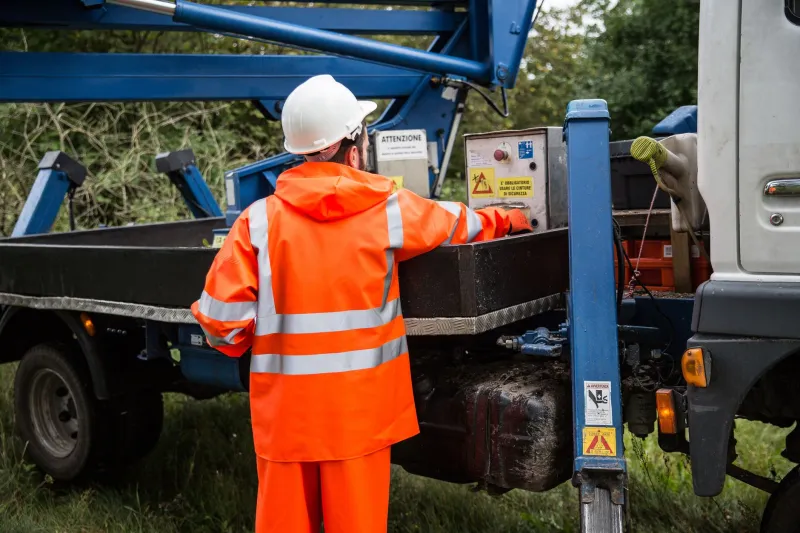
Under the Array: A Pre-Mobilisation Protocol for Powered Access on PV Roofs
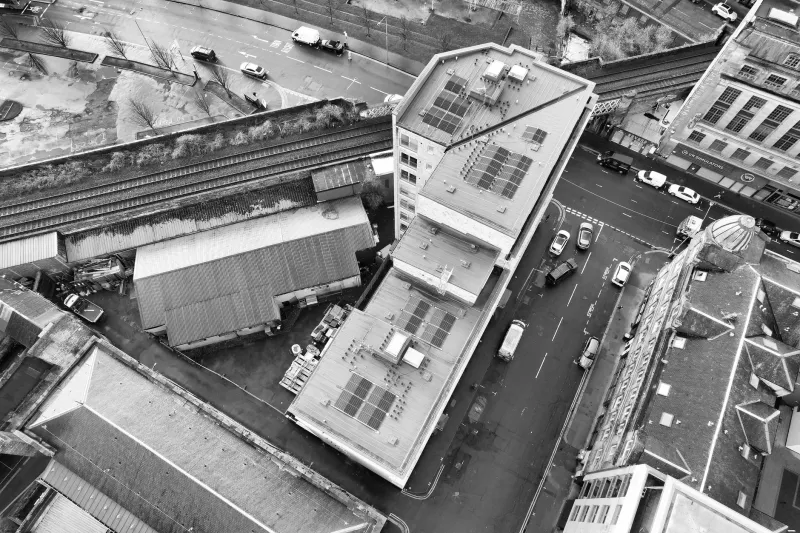
Rooftop photovoltaic arrays are now a familiar feature of UK commercial property. For facilities managers and contractors, however, the presence of PV should not be treated as a roof finish to be worked around. It is an electrical system, a fire-risk consideration and, in many cases, a fragile-surface constraint all at once. The access plan must reflect that reality before the first MEWP is booked, not after the platform is already positioned beneath a live array.
Treat the array as a system boundary
The central planning point is simple: the roof is no longer just a surface. It is an energy-generating installation with cabling, isolators, inverters and fire-service considerations. Powered access planning should therefore begin with a documented PV survey rather than a generic roof-access risk assessment. The survey should identify array layout, cable routes, isolator locations, inverter positions and any areas where access is restricted by the installation itself.
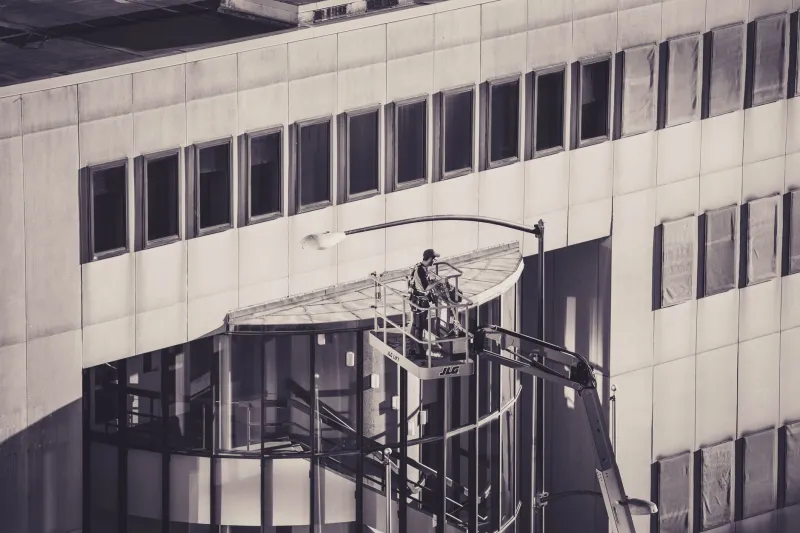
That information has a direct bearing on machine selection and positioning. A boom lift may need to reach over a parapet while keeping the basket clear of panel edges. A scissor lift may be appropriate for internal or low-level work but unsuitable where the platform would sit under concealed DC cabling. The survey should also record whether the roof has walkways, upstands, rooflights or other features that the array has obscured or made harder to inspect.
Confirm isolation and lock-off before mobilisation
PV systems present a particular challenge because modules continue to generate electricity when exposed to light. Isolation is not simply a matter of switching off an inverter. The contractor and the building operator need a agreed isolation and lock-off procedure that identifies who has authority to isolate, where the isolation points are, how they will be secured and how the work area will be proved dead or otherwise made safe.
This should be coordinated with the site’s permit-to-work system and the principal contractor or duty holder. The access provider should not assume that a verbal instruction at the site gate is sufficient. The pre-mobilisation pack should include the isolation sequence, the lock-off arrangements, the competent person responsible and the method for dealing with any stored energy or back-feed risk. Where the PV installation is owned or maintained by a third party, that interface must be confirmed in writing before the machine arrives.
Position the MEWP around load paths and cable routes
MEWP positioning on a PV roof is not only about reach. It is about load paths, cable protection and the avoidance of unnecessary contact with the array. Ground conditions and roof structure must be assessed for the machine’s point loads, and the route between the delivery point and the work area should be checked for concealed services, drainage runs and weak points.
On the roof itself, the platform should be positioned so that the basket does not overhang live cabling or force operatives to lean across panel edges. Where access is needed close to the array, the plan should state the minimum clearance and the means by which that clearance will be maintained. Barriers, marked walkways and exclusion zones can help, but they are only effective if they are shown on a drawing and explained at the pre-work briefing.
Reconcile fragile surfaces with concealed cabling
Many PV installations sit above or adjacent to fragile roof sheeting, rooflights or aged waterproofing. The array can hide the very defects that a roof-access survey would normally reveal. The pre-site survey should therefore include a condition check of the accessible roof areas and a clear statement of which surfaces are non-traversable. Where the PV layout prevents a full inspection, that limitation should be recorded and managed rather than ignored.
Concealed cabling adds a second layer of risk. Cable trays, conduits and loose leads may not be visible from the platform. The handover should identify known routes and state the rule for working near them. If the contractor needs to lift or move any panel, that should be treated as a specialist electrical task, not a general access activity. The boundaries of the access provider’s scope should be explicit.
Build emergency planning around the PV system
Emergency arrangements need to reflect the array as well as the machine. Rescue plans should account for isolation status, access routes for emergency services, and the possibility that a fire involving PV may require a different response from the fire and rescue service. The site-specific plan should identify the emergency contact, the location of isolators and the agreed meeting point. It should also state how the MEWP will be recovered or lowered if the primary power source is unavailable.
This is not a paperwork exercise. The emergency plan should be briefed to operatives and tested against the actual layout. If the only route to an isolator passes through the work area, or if the inverter is in a locked plant room, that needs to be resolved before mobilisation.
Make the handover a live document
Finally, the contractor handover should not stop at signatures. It should include a short PV-specific briefing covering array layout, cable routes, isolation status, restricted areas, emergency arrangements and the change-control procedure. Any change to the array, the roof loading or the access route should trigger a review of the plan.
For facilities teams, the practical test is whether the access provider can explain how the PV system affects the job before the machine is on site. If that conversation has not happened, the plan is incomplete. The array is part of the roofscape now, and powered access planning should treat it that way.